The short answer
Face-framing layers suit everyone, because they are not one cut. They are the pieces of hair in front, around your face, cut to a length that does something for your face shape. The right length is different for a round face and a long face. Get that right and they suit you.
The one way they go wrong is a stylist cutting them to a default length, usually the cheekbone, without looking at your face. On a round face that adds width at the widest point.
What face-framing layers actually are
Face-framing layers are the front sections of hair, on either side of the face, cut shorter than the rest and angled so they fall along the face. The rest of the hair can be one length or layered. The shortest point can be at the cheekbone, the jaw, the chin or below. The layers blend down into the length.
They are the cut behind most “she just looks more put together” haircuts. Nothing changes at the back, so the hair looks the same length. The front has a shape, so the face has a frame.
Face shapes and the length that works
- Round face. Shortest layer below the chin. Layers at the cheek add width. Layers below the chin add length.
- Square face. Shortest layer at the jaw, soft and wispy. They blur the angle.
- Heart face. Shortest layer at the jaw or chin. A heart face is narrow there and the layers add fullness.
- Diamond face. Shortest layer at the jaw, to add width below the cheekbones.
- Long face. Shortest layer at the cheekbone, to add width at the middle of the face.
- Oval face. Any length. Pick by how much of your face you want to show.
Hair types
| Hair | Verdict |
|---|---|
| Straight | Works. The layers show as clean lines. Keep them soft to avoid steps. |
| Wavy | The best match. The layers curl slightly away from the face on their own. |
| Curly | Works, cut dry and left longer. |
| Fine | Works, and it is the safest layered cut for fine hair because it only takes from the front. |
| Thick | Works, and the front pieces lighten the face even when the back stays heavy. |
What to ask for at the salon
Say “face-framing layers” and then say one thing: where the shortest piece should end. Point to your cheekbone, your jaw or your chin. That sentence decides the whole cut.
If you also want movement through the rest of the hair, add “and long layers through the back”. If you want the back left alone, say so, or you will get both.
The regret test
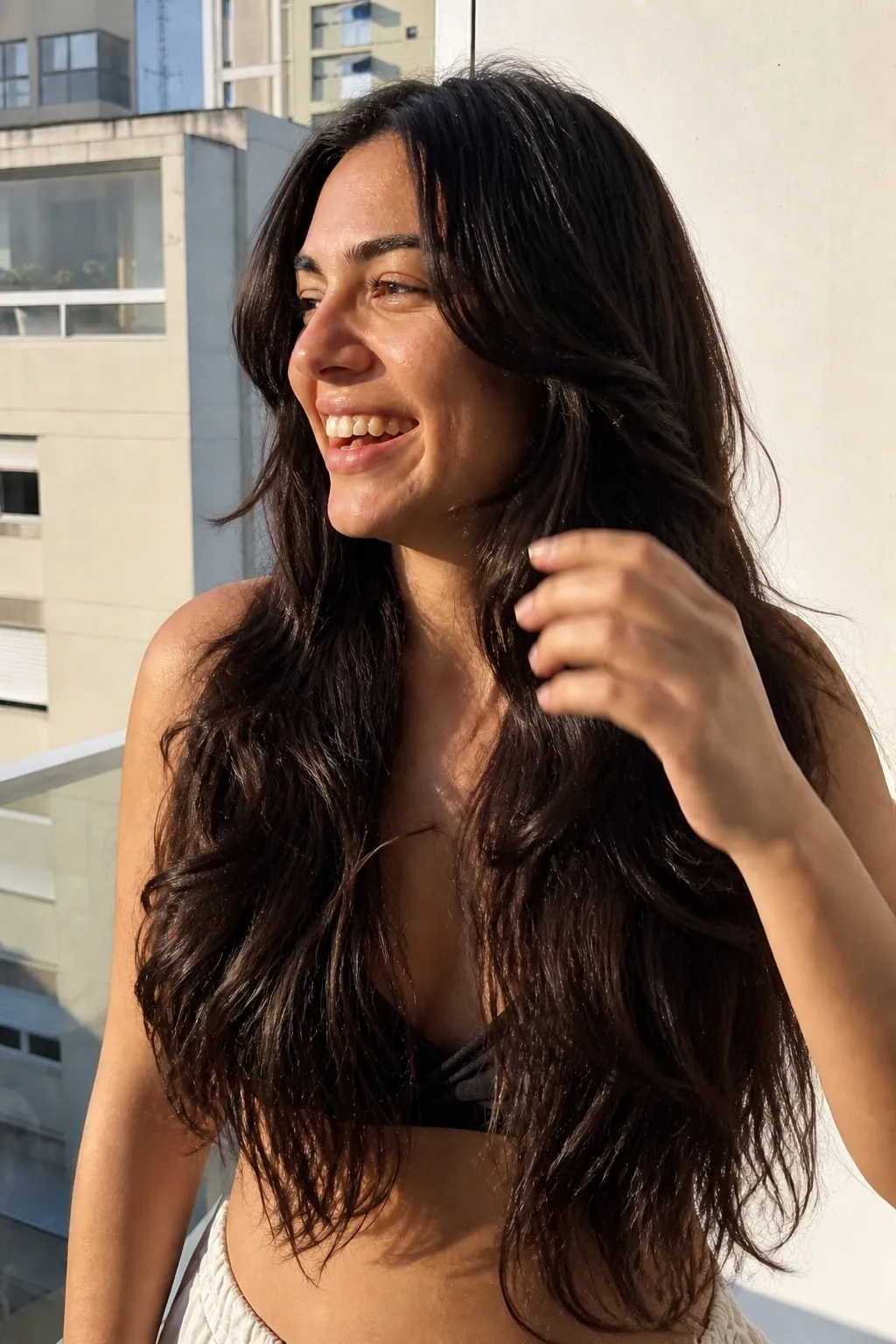
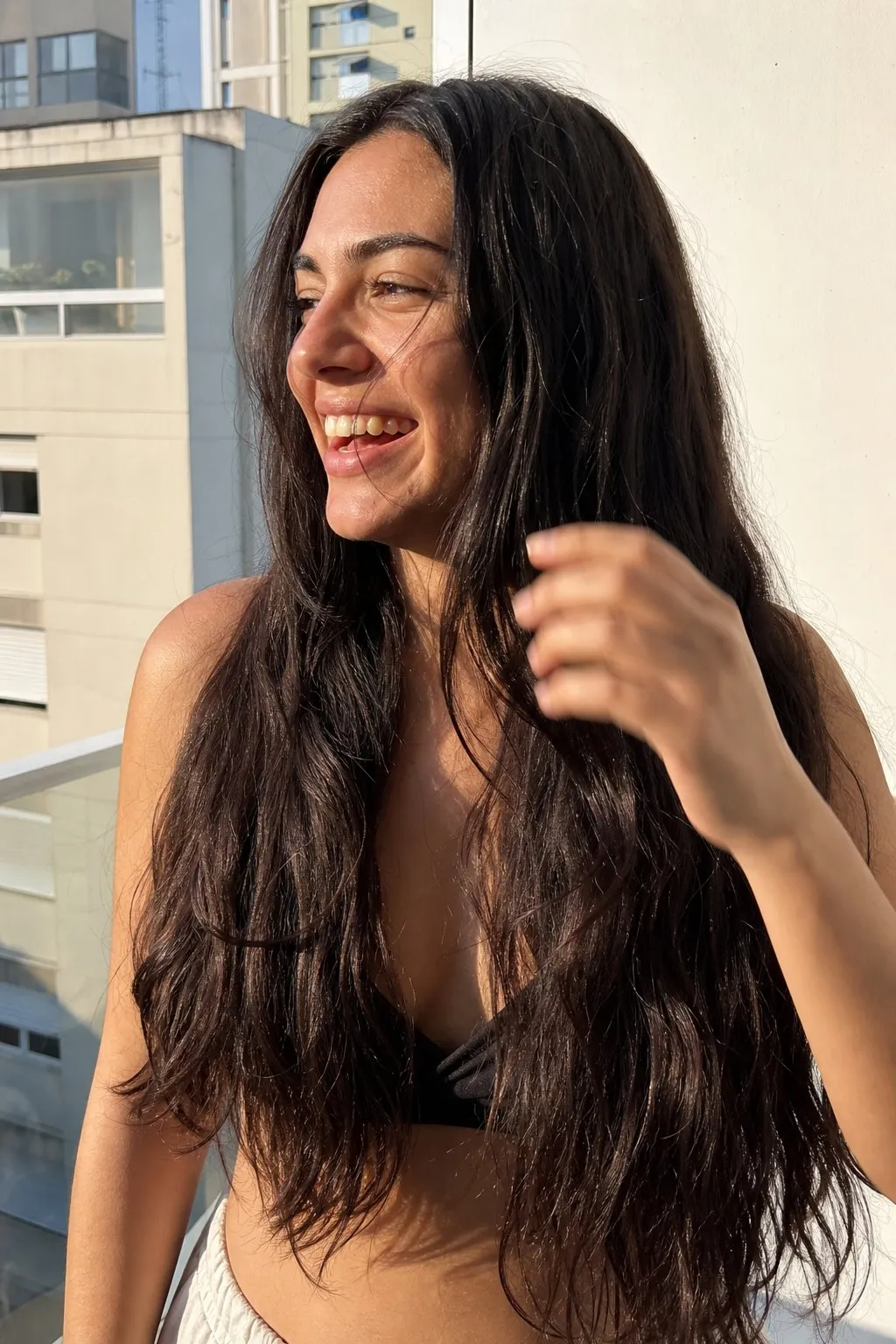
The slider at the top of this page shows one woman on one balcony in one afternoon sun. Only the hair changes. Her before is heavy, triangular, grown-out waves. Her after has short face-framing pieces that flick away from the jaw, long layers underneath and soft bangs. The face is the same and the hair is the same length. The frame is the change.
The HaircutAI app shows face-framing layers on your own selfie, next to your hair now. It reads your face shape first, so the layer length it previews is the one your face needs, not the salon default.