The short answer
A shag suits you if your hair is flat, heavy or blunt and you want it to move. It adds texture everywhere, volume at the crown and a soft frame around the face. It suits oval, round and square faces, and it works on straight, wavy and curly hair as long as the stylist cuts it for your texture.
It does not suit you if you want smooth hair. The shag is a cut you air-dry and leave. If you blow-dry it straight and sleek every morning, you have paid for layers you are flattening.
What a shag actually is
A shag is a layered cut where the layers run all the way from the crown to the ends, and every layer is cut for texture rather than for a clean line. It usually includes wispy, see-through bangs and face-framing pieces. The hair sits in pieces, not in a sheet. The length can be anything from the chin to the mid-back.
A modern shag is softer than the 70s version. The layers are blended, the bangs are sheer, and the overall shape is round rather than jagged.
Face shapes it flatters
- Oval faces. Everything works. The shag is a classic match.
- Round faces. Works when the layers add height on top and the face-framing pieces end below the chin. The height lengthens the face.
- Square faces. Works well. Soft, piecey layers around the jaw take the hardness out of the angles.
- Heart faces. Works with the bangs, which cover part of the forehead, and with layers that add fullness at the jaw.
- Long faces. Ask for the volume at the sides rather than the crown, and for shorter bangs. Height on top is the enemy here.
Hair types
| Hair | Verdict |
|---|---|
| Wavy | The ideal match. Air-dry and go. |
| Thick and straight | Excellent. The layers remove weight, and the texture shows on thick hair. |
| Fine and straight | Works with fewer, longer layers and a sheer fringe. Avoid over-layering. |
| Curly | Works, cut dry. The layers stop the curls from forming one heavy mass. |
What to ask for at the salon
Say “shag” and add three things:
- The length you want to keep at the back. Point to it.
- Whether you want bangs. Wispy bangs are part of the classic shag. Curtain bangs are a softer option.
- How much mess. Show a photo and say if it has more or less texture than you want.
Ask for a dry cut, or a dry check at the end. A shag’s whole job is how it sits when it dries on its own, and a wet cut guesses at that.
The regret test
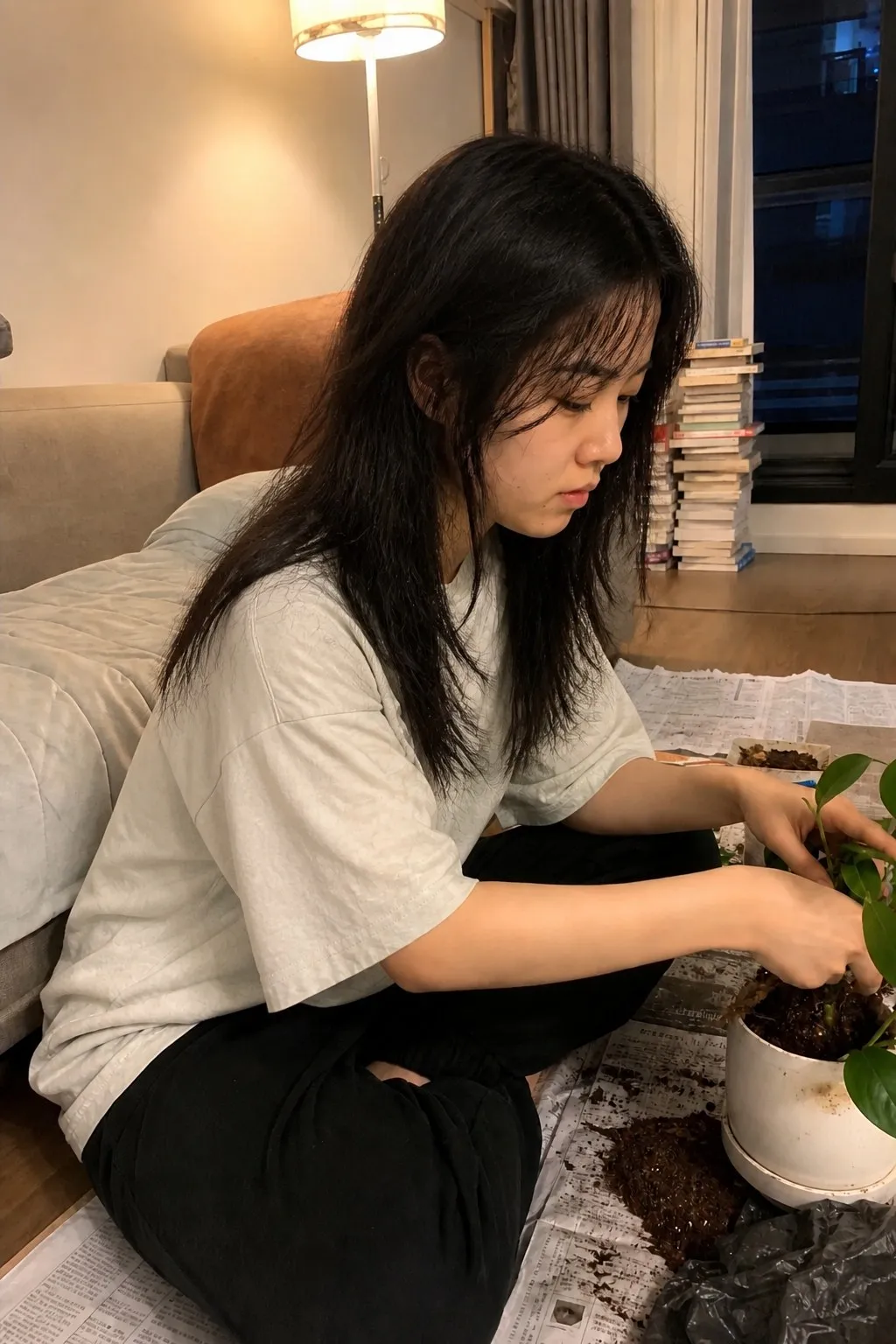
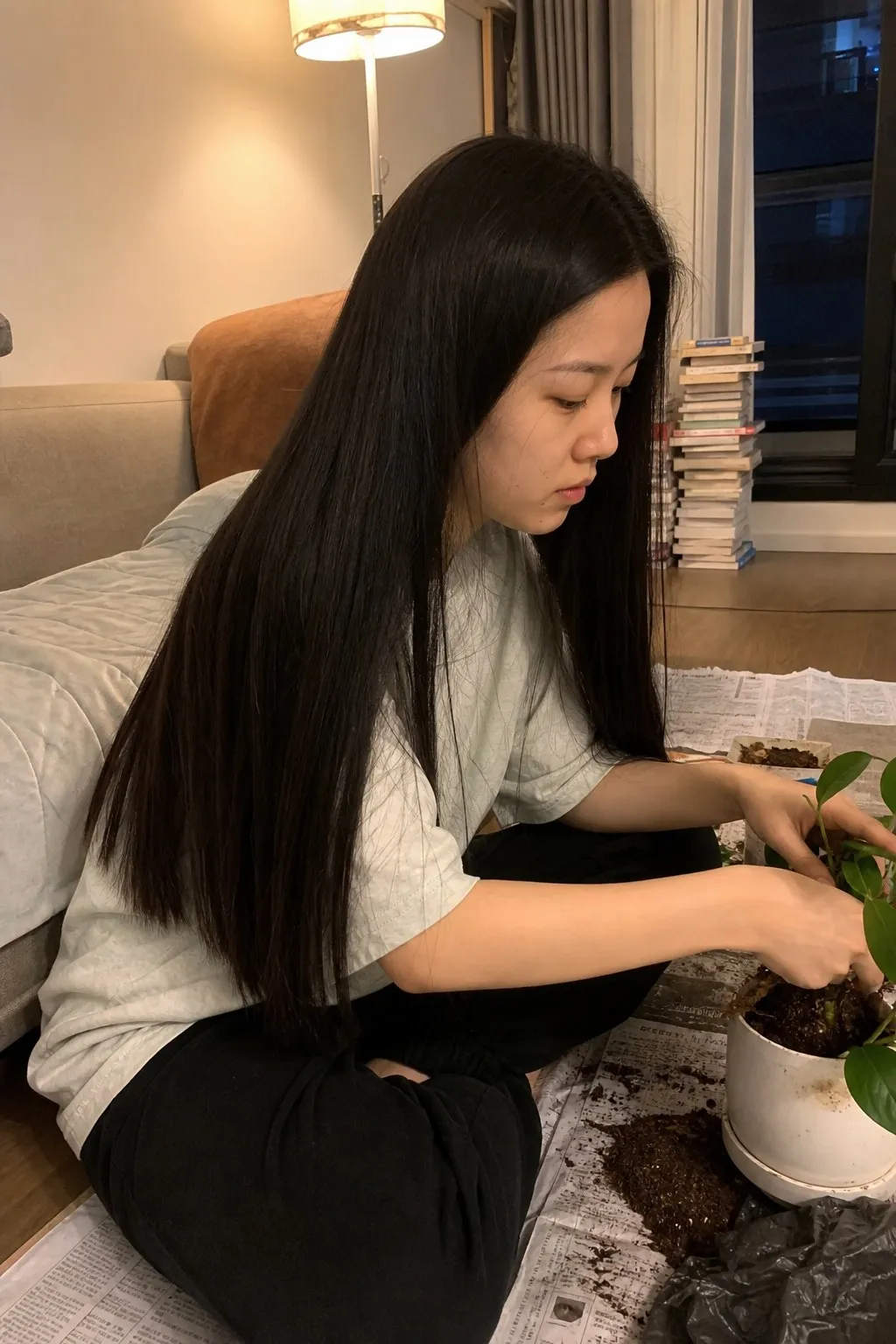
The slider at the top of this page shows one woman on one apartment floor in one lamp light. Only the hair changes. Her before is flat, blunt, one-length hair. Her after is a layered shag with wispy bangs. Same face, same plant, same lamp behind her. The hair goes from a sheet to pieces.
The HaircutAI app does this with your own selfie. It reads your face shape, shows a shag on your own head and puts the result next to your hair now. If the texture looks wrong, you have lost nothing. If it looks right, you book knowing.